

A profit target in day trading is a pre-set price level where you close a position to lock in gains before the market reverses. Every trader who survives long enough to build a real account uses a structured day trading profit targets list, not gut instinct. Professional traders anchor targets to risk-reward ratios between 1:2 and 1:3, account-based percentage goals of 2.5% to 3.0%, and technical tools like Fibonacci extensions and pivot points. The difference between a trader who lasts and one who blows up is almost always target discipline, not stock selection.
1. Risk-reward ratio-based profit targets
Risk-reward ratio is the foundation of every serious profit target system. The ratio compares how much you risk per trade to how much you aim to gain. A 1:2 ratio requires a 33.3% break-even win rate, while a 1:3 ratio lets you break even winning just 25% of the time. That math is what makes ratio-based targets so powerful: you can be wrong more than half the time and still grow an account.

Most discretionary day traders work within a 1:2 to 1:3 range. Scalpers, who hold positions for seconds to minutes, typically operate at 1:1.5 because their high-frequency approach demands win rates above 55% to stay profitable. The formula for placing a target is straightforward: multiply your stop loss distance by your chosen ratio and add it to your entry price on a long trade.
Position sizing ties directly into this. If you have a $10,000 account and risk 1% per trade ($100), with a stop loss $1.50 away, your position size equals 67 shares. Your 1:2 target sits $3.00 above entry. Every variable is defined before the trade opens.
- 1:1.5 ratio: Best for scalpers with win rates above 55%
- 1:2 ratio: Standard for most intraday discretionary setups
- 1:3 ratio: Used by trend-following and momentum traders
- Variable ratio: Adjusted per setup based on backtested results
Pro Tip: Never force a ratio onto a setup that does not support it. The best ratio is the one your specific, tested setup actually delivers, not the one that sounds most professional.
2. Technical level-based profit targets
Technical levels give your profit targets a logical reason to exist. Setting a target at a round number or an arbitrary dollar amount ignores where actual market orders cluster. Fibonacci 161.8% and 261.8% extensions are the most widely used extension targets among technical traders, and prior resistance zones are the most reliable support-turned-resistance anchors for intraday moves.
The logic is simple: large institutional orders sit at predictable technical levels. When your target aligns with a zone where sellers are likely to appear, your fill probability rises and your exit becomes cleaner. Placing a target in the middle of open air, by contrast, often means watching price stall just before your level and reverse.
Partial profit taking is the practical application of this idea. Taking 50% of your position off at the first technical target, then moving your stop to breakeven and letting the remainder run to a 1:2 or 1:3 level, balances locking in gains with capturing extended moves. This approach works especially well in trending sessions where momentum carries price through multiple resistance zones.
- Identify the prior session high or low as the first target zone
- Mark Fibonacci extension levels from the swing low to swing high
- Note daily and weekly pivot points as secondary targets
- Set your first partial exit at the nearest technical confluence
- Move stop to breakeven after the first partial exit executes
- Let the remaining position run to the next Fibonacci or pivot level
Pro Tip: When two or more technical levels cluster within a few ticks of each other, that confluence zone is almost always the highest-probability target. Prioritize it over any ratio-derived level that sits in open space.
3. Account size-based profit targets
Funded trading programs and professional prop desks set profit targets as a percentage of starting account balance. This approach keeps your daily goals proportional to your actual risk exposure and scales automatically as your account grows. Funded programs typically target 2.5% to 3.0% of starting balance, achieved across 6 to 15 trading days depending on trading style.
Here is how those numbers translate into real dollar targets by account size:
| Account Size | Target % | Dollar Target | Estimated Days |
|---|---|---|---|
| $50,000 | 3.0% | $1,500 | 6 to 10 days |
| $100,000 | 2.5% | $2,500 | 8 to 12 days |
| $150,000 | 2.5% | $3,750 | 10 to 15 days |
Conservative traders spread these targets over the full window. Aggressive traders try to hit them in fewer sessions, which increases daily variance and drawdown risk. The moderate approach, targeting roughly 20% to 25% of the total goal per day, gives you room to absorb losing sessions without blowing the challenge.
One critical rule many traders miss: funded accounts often cap single-day profit at roughly 30% of the total target. That means you cannot simply have one great day and call it done. Gains must be spread across multiple sessions, which forces consistency and penalizes reckless overtrading.
- Conservative: Target 15% to 20% of total goal per day
- Moderate: Target 20% to 25% of total goal per day
- Aggressive: Target 30% of total goal per day (funded account ceiling)
4. Advanced execution tactics for hitting profit targets
Knowing where to set a target is only half the problem. Getting filled at that price is the other half. Most traders place a single limit order at their target and hope for the best. That approach, sometimes called a one-shot order, reduces fill probability because a single large order at one price is easier for the market to skip through.
The better method is to stagger smaller limit orders across a target band. If your target zone spans three ticks, place orders at each tick rather than concentrating everything at the top. Varying time-in-force settings across those orders, and monitoring order book depth at the target price, increases the chance that at least part of your position exits at a favorable level.
Running purpose-built probe orders at proposed profit targets during live sessions, before committing full size, lets you empirically measure fill rates and slippage under real market conditions. This is one of the most underused tactics in retail day trading.
OCO (one-cancels-other) setups automate the process. You place a profit target limit order and a stop loss order simultaneously, and the platform cancels the remaining order once one fills. This removes the need to manually cancel orders during fast-moving sessions and prevents the costly mistake of forgetting an open limit order after a stop fires.
Monitoring order book depth-to-volume ratios at your target price during similar prior sessions gives you a data-based read on whether your target is realistic for the current liquidity environment. Thin books at your target level are a warning sign to either tighten the target or reduce position size.
5. Scalping profit targets
Scalping targets are the tightest on the day trading profit targets list. The goal is not to capture large moves but to accumulate small, consistent gains across many trades. A scalping signal checklist helps confirm that each setup meets minimum criteria before entry, which is critical when you are trading at high frequency with thin margins.
Scalpers typically work at a 1:1.5 risk-reward ratio and rely on win rates above 55% to stay profitable. Targets are usually set just below the nearest resistance level, often within 5 to 10 ticks of entry. The edge comes from repetition and precision, not from any single large winner.
Pro Tip: If your scalping win rate drops below 55% for more than two consecutive sessions, widen your review window before adjusting targets. A short-term slump in win rate is often a market condition problem, not a target placement problem.
6. Momentum trading profit targets
Momentum traders aim for wider targets, typically 1:2 or 1:3, because their setups depend on price continuing in one direction for a meaningful distance. Momentum strategies require larger targets with lower win rates, which means a string of losses is normal and expected within a profitable system.
The key adjustment for momentum traders is patience. Exiting early at a 1:1 level feels safe but systematically destroys the edge that makes the strategy work. The math only holds if you let winners run to the full target. Partial exits at 1:1 followed by a trail stop on the remainder is the standard compromise between locking in gains and preserving the statistical edge.
Understanding how indicators generate profits in momentum setups helps traders identify which signals have historically produced the widest moves, which directly informs target placement. Not every momentum signal supports a 1:3 target. Matching target size to the historical average move of your specific setup is what separates systematic traders from guessers.
7. Mean reversion profit targets
Mean reversion strategies flip the script. Mean reversion trades carry higher win rates but smaller gains per trade, which means targets are deliberately conservative. The setup assumes price has moved too far from a statistical average and will snap back, so the target is the mean itself, not an extended Fibonacci level.
Targets for mean reversion setups typically sit at the 20-period or 50-period moving average, the VWAP, or the prior session's midpoint. These are high-probability levels where price has historically returned, which keeps win rates elevated. The tradeoff is that individual winners are small, so position sizing and trade frequency matter more than in momentum or trend-following approaches.
The practical rule: use percent-based profit targets for mean reversion trades to keep gains proportional to your maximum allowed exposure. A 0.5% to 1.0% gain per trade, repeated consistently across 10 to 15 setups per session, compounds into meaningful daily returns without requiring large individual winners.
Key takeaways
Effective profit targets combine ratio-based math, technical anchoring, and account-proportional goals to create a system that is both measurable and repeatable.
| Point | Details |
|---|---|
| Risk-reward ratio is foundational | A 1:2 ratio breaks even at 33.3% win rate; match ratio to your tested setup, not a generic standard. |
| Technical levels improve fill rates | Anchor targets to Fibonacci extensions, pivot points, or prior resistance for higher execution probability. |
| Account-based targets scale automatically | Funded programs target 2.5% to 3.0% of balance; spread gains across multiple days to satisfy consistency rules. |
| Stagger orders across a target band | Breaking your exit into multiple smaller limit orders across a price band reduces slippage and improves fills. |
| Match targets to your strategy style | Scalpers use 1:1.5 with high win rates; momentum traders use 1:2 to 1:3 with lower win rates and wider targets. |
Why most traders get profit targets wrong
I have reviewed hundreds of trading journals over the years, and the pattern is almost always the same. Traders set targets based on what feels right in the moment, not what their setups have historically delivered. They widen targets during winning streaks and tighten them during losing streaks, which is exactly backwards. The target should be the most stable variable in your trading system, not the most reactive one.
The traders I have seen build consistent accounts share one habit: they backtest their specific setups to find the average favorable excursion, then set targets at roughly 80% of that number. Not the maximum move. Not a round number. The level where price has historically reached before reversing, with a small buffer to account for slippage. That is a target with a reason behind it.
The psychological advantage of a rule-based target is underrated. When you know your target is grounded in data, you stop second-guessing exits during the trade. That mental clarity is worth more than any marginal improvement in target placement. Discipline compounds. Emotional exits do not.
My honest recommendation: build your day trading profit targets list from the inside out. Start with your actual setup data, then layer in technical anchors, then fit the result to your account size constraints. That sequence produces targets you will actually stick to.
— Tran
How Quantlogicx helps you set precise profit targets
Setting profit targets manually across multiple markets is time-consuming and error-prone. Quantlogicx removes that friction with a TradingView indicator that delivers automated long and short signals, built-in Fibonacci detection, and real-time support and resistance mapping directly on your chart.
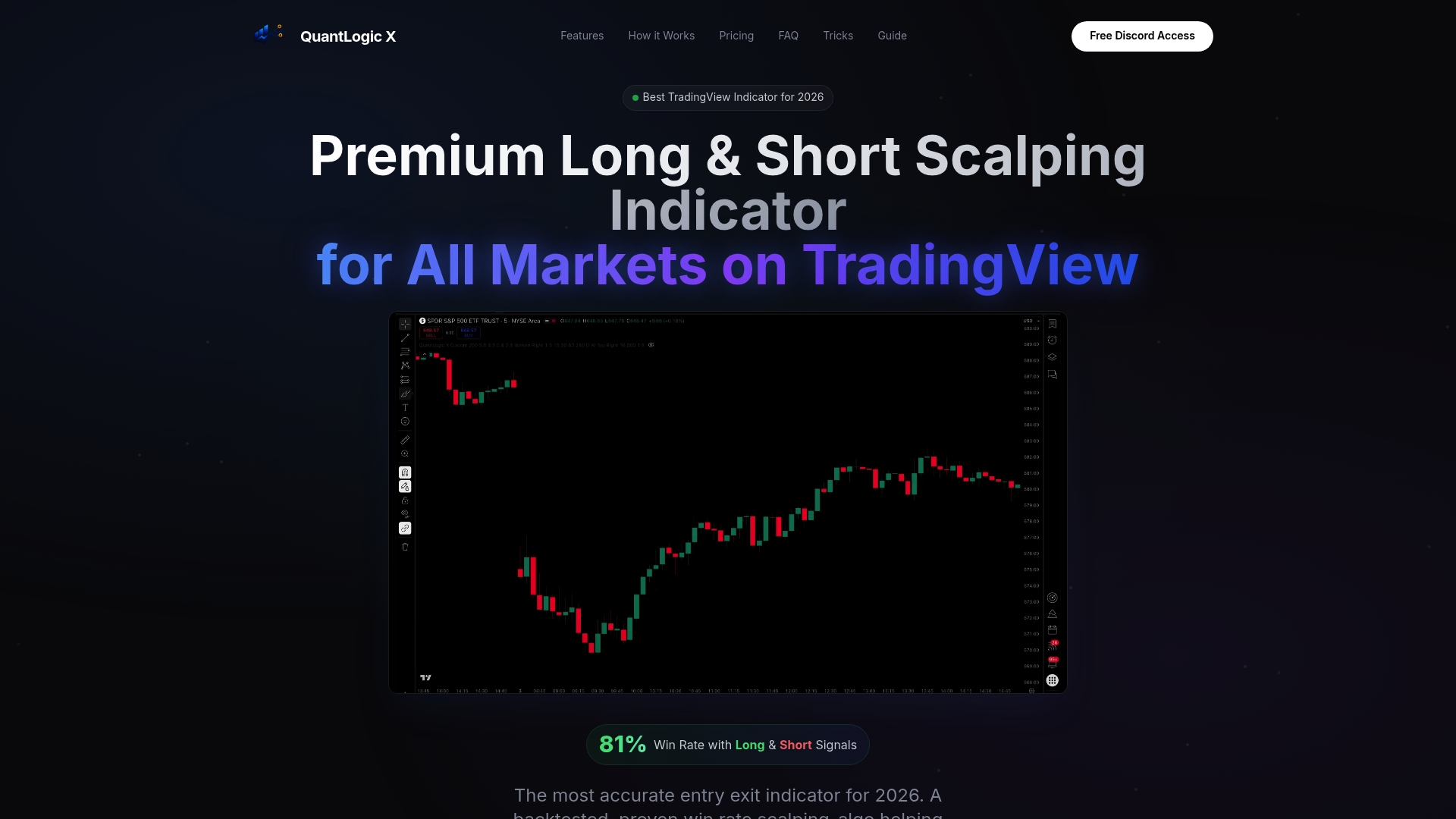
The indicator's zero-repaint technology means every signal is confirmed at bar close, so you are never chasing a target based on a signal that disappears. Over 2,000 traders use Quantlogicx across stocks, forex, and crypto, with individual users recording gains of $8,200 in a single month. Whether you are setting scalping targets at 1:1.5 or momentum targets at 1:3, the QuantLogicX forex signals give you the technical foundation to place targets with confidence rather than guesswork. Visit quantlogicx.com to see the full feature set and join the community.
FAQ
What does a profit target mean in trading?
A profit target is a pre-defined price level where a trader closes a position to realize gains. It is set before the trade opens and removes emotional decision-making from the exit process.
What is a good risk-reward ratio for day trading?
Most professional day traders use a 1:2 or 1:3 risk-reward ratio, which requires win rates of only 33.3% or 25% respectively to break even. Scalpers often use 1:1.5 with win rates above 55%.
How do I set profit targets based on account size?
Funded trading programs set targets at 2.5% to 3.0% of starting account balance, achieved over 6 to 15 trading days. A $100,000 account targets $2,500 total, spread across multiple sessions to satisfy consistency rules.
Should I use partial profit taking or a single exit?
Partial profit taking, such as closing 50% of a position at a 1:1 level and moving the stop to breakeven, locks in gains while keeping exposure to a larger move. This approach outperforms single-exit strategies in trending market conditions.
How do profit targets differ by trading strategy?
Scalping uses tight targets at 1:1.5 with high win rates. Momentum trading uses wider targets at 1:2 to 1:3 with lower win rates. Mean reversion strategies use conservative targets at moving averages or VWAP with the highest win rates but smallest individual gains.