

A zero repaint indicator is defined as a technical analysis tool that locks its signals permanently at bar close, never shifting or disappearing after the candle confirms. This is the single most important distinction between a reliable trading system and one that looks great in hindsight but fails you in live markets. Repainting indicators generate historically perfect signals that vanish during live trading, creating false optimism and broken confidence. Zero repaint indicator benefits go beyond aesthetics. They determine whether your entries, exits, and risk calculations are built on real data or illusion. Platforms like TradingView and coding frameworks like Pine Script have made it possible to build and verify truly non-repainting tools, and understanding how they work gives you a measurable edge.
1. Zero repaint indicator benefits: why signal stability changes everything
Signal stability is the foundation of every profitable trading system. When an indicator's signal stays fixed after the bar closes, you can plan your stop-loss and take-profit levels with precision. You know the signal will not vanish overnight and make your position look like a mistake you never made.

Repainting indicators do the opposite. They trick traders into false optimism by showing signals that look perfect on a historical chart but disappear in real time. This leads directly to revenge trading, where a trader chases a signal that no longer exists and compounds losses trying to recover.
The non-repaint indicator advantages extend into backtesting as well. Zero repaint indicators enable realistic backtesting results by relying solely on past closed-bar data, which eliminates lookahead bias and the inflated win rates that repainting scripts produce. A backtest built on honest signals gives you a strategy you can actually trust forward.
- Definitive entries and exits: Signals confirmed at bar close let you set alerts and execute trades without second-guessing whether the signal will still be there.
- Accurate risk management: Fixed signals allow precise stop-loss placement because the signal reference point does not move.
- Honest backtesting: Strategy results reflect real historical conditions, not retroactively adjusted signals.
- Psychological stability: Traders who use non-repainting tools report fewer impulsive decisions because they are not chasing signals that disappear.
Pro Tip: Before trusting any indicator's backtest results, check whether its signals are based on closed bars. If the win rate looks suspiciously high, repainting is almost always the reason.
2. How zero repaint indicators work technically
The technical mechanism behind a zero repaint trading system comes down to one core rule: signals must only fire after a bar is fully closed. In Pine Script, this is enforced using "barstate.isconfirmed`, which ensures signals appear post candle-close and prevents any mid-bar signal changes.
Here is how the three most common repainting causes are addressed in a properly coded zero repaint indicator:
- Bar-close confirmation: The script uses
barstate.isconfirmedso that no signal plots until the current bar is finished. This eliminates the most common source of repainting. - Correct higher-timeframe referencing: Improper use of
request.securitywith lookahead enabled reads forming higher-timeframe bars, which causes repainting. The correct method reads the previous completed bar with lookahead disabled, usingclose[1]instead ofcloseon higher-timeframe calls. - Alert and signal alignment: The best zero repaint indicators have alert logic perfectly aligned with plotted signals. If an alert fires before the visual signal appears on the chart, the indicator has a hidden repainting problem even if the plot looks stable.
"Barstate.isconfirmed clears one major repaint cause, but a comprehensive non-repaint script also audits alert timing and multi-timeframe data to ensure true signal honesty." — Jayadev Rana
Referencing close[1] instead of close on higher-timeframe bars is a subtle but critical detail. It prevents hidden repainting that can invalidate signal honesty even in scripts that appear stable on the surface.
3. Top zero repaint indicators traders should consider in 2026
Not all non-repainting tools are built the same. The right choice depends on your trading style, market, and timeframe. Here are the categories of zero repaint indicators worth evaluating:
- Trend-following indicators: These plot directional signals based on moving average crossovers or trend structure, confirmed only at bar close. They work well for swing traders on daily and four-hour charts in forex and equities.
- Momentum-based indicators: Tools like RSI-derived signal systems that fire only on confirmed overbought or oversold conditions. These suit traders who want to enter on exhaustion moves rather than trend continuation.
- Volume-confirmed signal tools: Indicators that combine price action with volume thresholds, triggering only when both conditions are met on a closed bar. These reduce false signals in low-liquidity environments.
- Multi-timeframe confirmation systems: Scripts that reference a higher timeframe's closed bar to filter lower-timeframe signals. When coded correctly with
request.securityand lookahead disabled, these offer strong signal quality for day traders. - QuantLogic X: Quantlogicx offers a TradingView indicator built specifically for scalping across stocks, forex, and cryptocurrency. Its long and short signals are locked at bar closure, and over 2,000 traders have used it to generate consistent results. The buy-sell signal system is designed so that every alert matches the plotted signal exactly, which is the standard every zero repaint tool should meet.
The key question to ask about any indicator in this category is whether its alerts and plots are synchronized. A tool that plots correctly but fires alerts mid-bar is not truly zero repaint in live trading conditions.
4. How to verify and test if an indicator is truly zero repaint
Claiming zero repaint status is easy. Proving it requires a specific testing process. Here is how to verify any indicator before trusting it with real capital:
- Use TradingView's Bar Replay feature. Step through bars one at a time and watch whether signals appear, disappear, or shift position. Traders should review at least 50 candles in Bar Replay for a reliable verification sample.
- Check the source code for
barstate.isconfirmed. If the script is open-source, confirm this function is used on every signal condition. Its absence is a red flag. - Audit
request.securitycalls. Look for lookahead settings and confirm the script referencesclose1]rather thancloseon higher-timeframe data. [Experts recommend thorough script auditing beyond simply checking forbarstate.isconfirmed. - Test alert timing against chart signals. Set an alert on the indicator and compare when it fires versus when the signal appears visually. Any mismatch indicates intrabar triggering, which is a form of repainting.
- Reload the chart after signals appear. A genuine zero repaint indicator shows identical signals before and after a page reload. If any signals move or disappear after reloading, the indicator is repainting.
Pro Tip: Run your Bar Replay test across at least two different market conditions: a trending period and a ranging period. Repainting behavior often surfaces specifically during choppy, sideways price action where signals are most ambiguous.
5. Zero repaint vs. repainting indicators: a direct comparison
The differences between these two categories affect every part of your trading workflow, from strategy development to live execution.
| Feature | Zero repaint indicators | Repainting indicators |
|---|---|---|
| Signal stability | Signals lock permanently at bar close | Signals shift or disappear after bar close |
| Backtesting accuracy | Reflects real historical conditions | Inflates win rates with lookahead bias |
| Trader psychology | Builds confidence through consistent signals | Causes confusion and revenge trading |
| Alert reliability | Alerts fire only on confirmed closed-bar conditions | Alerts may trigger mid-bar and then invalidate |
| Live trading performance | Matches backtest behavior closely | Often underperforms backtest results significantly |
Confirmed bar signals often lag intrabar signals slightly, but traders gain the trust and reliability that matter for long-term success by accepting this trade-off. Speed without accuracy is not an edge. It is a liability.
Key takeaways
Zero repaint indicators are the only reliable foundation for a trading system because they deliver signals that match live market conditions exactly, with no retroactive adjustment.
| Point | Details |
|---|---|
| Signal finality matters most | Signals locked at bar close allow precise stop-loss and take-profit planning without second-guessing. |
| Backtesting requires honest data | Zero repaint tools eliminate lookahead bias, making strategy results statistically trustworthy. |
| Verification is non-negotiable | Use TradingView's Bar Replay and audit Pine Script code before trusting any indicator's zero repaint claim. |
| Alert alignment is critical | Alerts must fire at the same moment as plotted signals. Any mismatch means the tool is not truly zero repaint. |
| Lag is a feature, not a flaw | Accepting slight signal delay in exchange for confirmed accuracy is the correct trade-off for consistent trading. |
Why I changed my mind about signal speed
I spent two years prioritizing fast signals. I wanted to be first in the trade, ahead of the confirmation, ahead of the crowd. The results were predictable in the worst way: my backtests looked excellent and my live account did not. The gap between the two was not a strategy problem. It was a repainting problem I had not diagnosed yet.
The shift happened when I started auditing indicators at the code level rather than the chart level. What looked like a stable signal on a historical chart was actually a signal that had been redrawn after the fact. The chart showed me what the indicator wanted me to see, not what it had actually generated in real time.
Non-repainting indicators prevent costly mistakes from chasing vanished signals, and they reduce the emotional spiral that follows. Once I accepted the slight lag that comes with bar-close confirmation, my entries became more deliberate and my risk management actually held. I stopped placing stops based on signals that no longer existed.
My recommendation: combine a zero repaint signal tool with basic price action structure. Use the indicator to identify direction and the price action to time your entry within that direction. Multi-indicator confirmation adds another filter, but only if every tool in your stack is also non-repainting. One repainting indicator in a multi-tool setup contaminates the whole system.
— Tran
See zero repaint signals in action with QuantLogic X
If you have been burned by indicators that look perfect on paper and fail in live trading, the problem is almost certainly repainting. Quantlogicx was built specifically to solve this. The QuantLogic X TradingView indicator generates long and short signals that are locked at bar closure, with alert logic synchronized to the plotted signal. Over 2,000 traders across stocks, forex, and cryptocurrency use it as their primary signal tool.
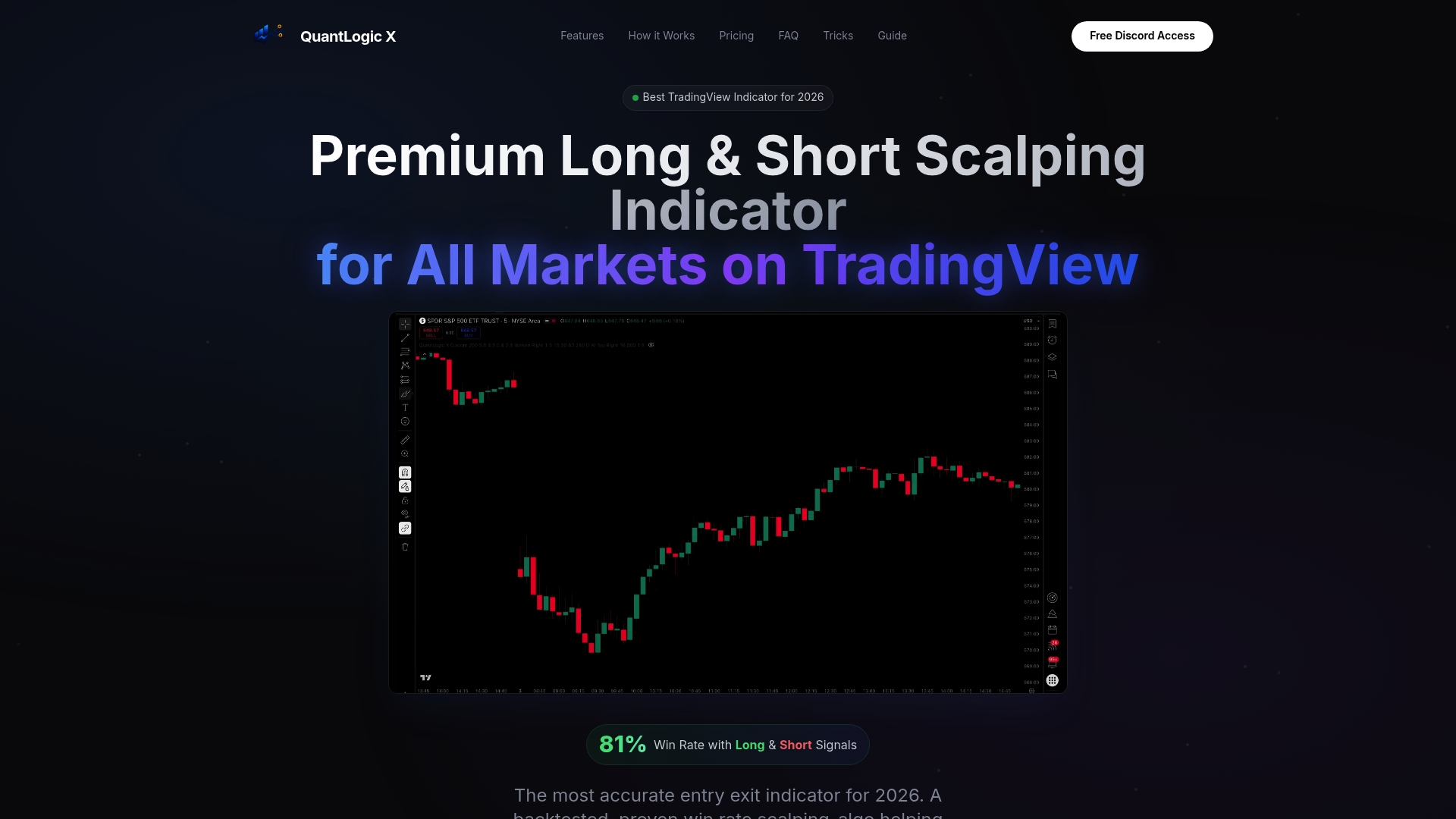
The indicator carries an 81% win rate across multiple markets and has produced documented monthly gains for individual users. It works for scalpers who need fast, reliable signals and for swing traders who want clean entries without the noise of repainting tools. If you want to see what a genuinely non-repainting system looks like in practice, explore QuantLogic X and test it against your current setup.
FAQ
What is a zero repaint indicator?
A zero repaint indicator is a technical tool that permanently fixes its signals at bar close, never shifting or disappearing after the candle confirms. This makes its signals reliable for both live trading and backtesting.
Why do repainting indicators fail in live trading?
Repainting indicators generate signals based on forming bars, which means those signals can change or vanish before the bar closes. The result is a backtest that looks profitable but a live account that does not match it.
How do I know if my indicator is truly zero repaint?
Use TradingView's Bar Replay feature to step through at least 50 candles and watch whether signals hold their position. Also check the Pine Script code for barstate.isconfirmed and confirm that alert timing matches plotted signals exactly.
Does a zero repaint indicator lag more than a repainting one?
Yes, slightly. Confirmed bar signals wait for the candle to close before plotting, which means they appear one bar later than intrabar signals. This lag is the cost of accuracy, and it is worth paying for consistent, trustworthy entries.
Can I use a zero repaint indicator for scalping?
Yes. Tools like QuantLogic X are designed specifically for scalping and use bar-close confirmation to keep signals stable. The key is choosing a zero repaint tool calibrated for the timeframe and market you trade.