

Signal-based trading is the process of using objective, rule-driven market alerts to remove guesswork from trading decisions. Understanding how signal-based trading reduces guesswork matters because 72% of retail day traders incur net losses, and the primary cause is emotional, undisciplined decision-making. Signals replace that emotional noise with measurable criteria. Whether you trade stocks, forex, or crypto, a rules-based signal system gives you a defined reason to enter or exit every trade. Quantlogicx applies this principle directly, delivering zero-repaint long and short signals that lock in at bar closure so you always know exactly where you stand.
How signal-based trading reduces guesswork in real markets
Signal-based trading converts chaotic price movements into quantifiable, repeatable patterns that traders follow systematically. A signal is not a prediction. It is a rule-based alert that fires when the market meets a specific, predefined condition. That distinction matters more than most traders realize.

Discretionary trading asks you to weigh dozens of variables in real time and make a judgment call under pressure. Signal-based trading asks you to wait for a condition to be met, then act. The decision was made before the market opened.
Common signal types include:
- Moving average crossovers: A short-period moving average crossing above a long-period one signals a potential uptrend entry.
- RSI thresholds: A Relative Strength Index reading below 30 signals oversold conditions, while above 70 signals overbought.
- Volume spikes: Abnormal volume on a breakout confirms the move has institutional backing.
- Algorithmic triggers: Pre-coded logic fires a long or short alert when multiple conditions align simultaneously.
Trading signals provide structured alerts when market conditions meet predefined rules. That structure replaces speculation with a clear rationale for every trade. A trader using RSI crossovers does not ask "does this feel right?" They ask "did the RSI cross the threshold?" One question has a definite answer. The other does not.
Pro Tip: Never treat a signal as a forecast. A signal tells you conditions are right to take a trade. It does not guarantee the outcome. Keeping that distinction clear protects you from overconfidence.
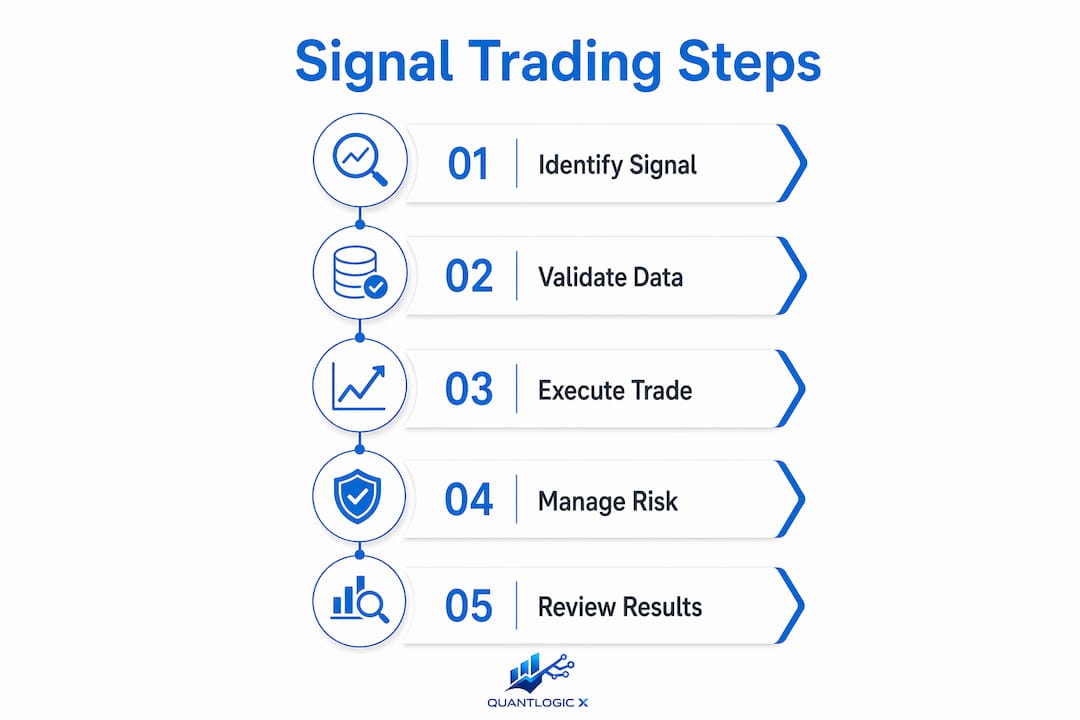
What evidence supports the effectiveness of signal-based trading?
The data on discretionary retail trading is stark. Only 1–4% of day traders achieve consistent long-term profitability. That means the vast majority of traders relying on instinct and gut feel lose money over time. Signal-based approaches exist specifically to address that failure rate.
Institutional performance tells a different story. Algorithmic models can evaluate over 2 million trades daily, and some systematic signal portfolios returned 16.6% gains in 2022 while the S&P 500 fell nearly 20%. That gap is not luck. It reflects the power of removing human emotion from execution.
"Most retail traders fail due to emotional trading, lack of discipline, and excessive guesswork. Signals institutionalize decision-making and improve long-term outcomes."
The firms that pioneered this approach built their edge on data, not intuition. Renaissance Technologies inspired a generation of quantitative traders by using vast datasets to identify repeatable, obscure signals that produced consistent outperformance. The lesson is not that you need a supercomputer. The lesson is that repeatable rules beat improvisation.
Backtesting is the mechanism that separates useful signals from noise. Running a signal against historical price data reveals its win rate, average gain, average loss, and maximum drawdown before you risk a single dollar. Traders who skip backtesting are essentially driving without a speedometer. They have no idea how fast they are going or when they are likely to crash.
Signals require ongoing refinement as markets evolve. A signal that worked well in a trending 2020 market may underperform in a choppy 2024 range. Effective traders treat their signal system as a living framework, not a fixed formula.
How does signal-based trading integrate risk management?
Signals tell you when to enter. Risk management tells you how much to risk and when to exit. Neither works well without the other. Combining them is what separates professional trading from gambling.
A structured approach to risk management within a signal system follows a clear sequence:
- Calculate risk before entry. Identify your stop-loss level before placing the trade. Know exactly how much you lose if the signal fails.
- Set a reward target. Pre-entry risk-to-reward planning with targets at least 1.5–2x the risk keeps you net profitable even when fewer than half your trades win.
- Apply stop-loss signals. Hard stops are non-negotiable. A signal system without a stop-loss is incomplete.
- Let winners run. Exit signals based on price action or indicator reversal, not on anxiety about giving back gains.
- Track statistical expectancy. Over a series of trades, your average win multiplied by win rate minus average loss multiplied by loss rate must be positive.
The 3-5-7 risk rule is a practical framework many signal traders use. Risk no more than 3% of capital on any single trade, keep total open risk below 5% of capital, and target a 7% or greater reward on winning trades. This structure means a losing streak does not destroy your account before the signal system has time to prove itself.
Pro Tip: Paper trade your signal system for at least 30 trades before going live. You need a statistically meaningful sample to know whether the system has edge, not just a lucky week.
What practical steps help traders start using signals effectively?
Adopting signal-based trading is a process, not a switch you flip. Traders who rush into automation before understanding their signals tend to abandon the system the moment it hits a drawdown. A phased approach builds both skill and confidence.
Start with one or two well-understood signals. A moving average crossover on a daily chart is simple enough to monitor manually and clear enough to teach you how signals behave across different market conditions. You can learn to read trading signals without any coding or advanced math.
Paper trading is the most underused tool in a new signal trader's kit. It costs nothing, carries no risk, and generates real data about how your chosen signals perform. Treat paper trades with the same discipline you would apply to live capital. Record every entry, exit, and reason.
Key habits that separate successful signal traders from those who quit:
- Follow the signal strictly. Ignoring signals due to emotion is the single largest risk to performance. If you override your system every time it feels uncomfortable, you no longer have a system.
- Add complexity gradually. Start with one signal, master it, then layer in a confirming filter such as volume or trend direction.
- Review your trades weekly. Look for patterns in your losses. Are you exiting early? Entering late? The data tells you what your instincts cannot.
- Automate only when you understand. Automated execution removes hesitation, but it also removes your ability to catch errors. Know your system before you hand it to an algorithm.
You can find a full walkthrough of starting with stock signals that covers the transition from manual to automated execution in practical detail.
Combining multiple signals with risk controls and continuous evaluation creates a trading framework that holds up across different market environments. That adaptability is what makes signal-based trading worth the learning curve.
Key Takeaways
Signal-based trading reduces guesswork by replacing emotional decisions with rule-driven alerts, and traders who pair strong signals with disciplined risk management consistently outperform those relying on instinct alone.
| Point | Details |
|---|---|
| Signals replace emotion | Rule-based alerts fire on defined conditions, removing fear and greed from every entry and exit. |
| Retail failure rates are high | Only 1–4% of day traders profit consistently; signals address the emotional bias driving that failure. |
| Institutional models prove the edge | Systematic signal portfolios returned 16.6% in 2022 while the S&P 500 fell nearly 20%. |
| Risk management completes the system | Pre-entry reward targets of at least 1.5–2x risk keep you profitable even with a sub-50% win rate. |
| Discipline is non-negotiable | Overriding signals based on emotion is the fastest way to destroy a system that would otherwise work. |
Why I stopped second-guessing my signals
The hardest part of signal-based trading is not finding good signals. It is trusting them when they feel wrong. I spent months building a system with a solid backtest, then overriding it the moment a trade looked uncomfortable. Every override felt justified in the moment. Most of them were mistakes.
The turning point came when I started tracking every override separately from my signal trades. The override trades lost money at a rate that would have wiped my account in six months. The signal trades, followed without interference, were net positive. The data made the argument my instincts could not.
Losing streaks are the real test of a signal system. Every system has them. The traders who survive drawdowns are the ones who understand their system's statistical expectancy well enough to know the streak will end. The traders who quit are the ones who never built that understanding in the first place.
Adapting signals to changing market conditions is also real work. A signal tuned for trending markets needs adjustment in a range-bound environment. That does not mean abandoning the system. It means reviewing performance data regularly and making calibrated changes, not emotional ones.
The bottom line is this: a signal system is only as good as your willingness to follow it. Trading psychology and signal discipline are not separate topics. They are the same topic.
— Tran
Quantlogicx signals built for traders who want clarity
Traders who want to put signal discipline into practice immediately have a direct path forward with Quantlogicx.
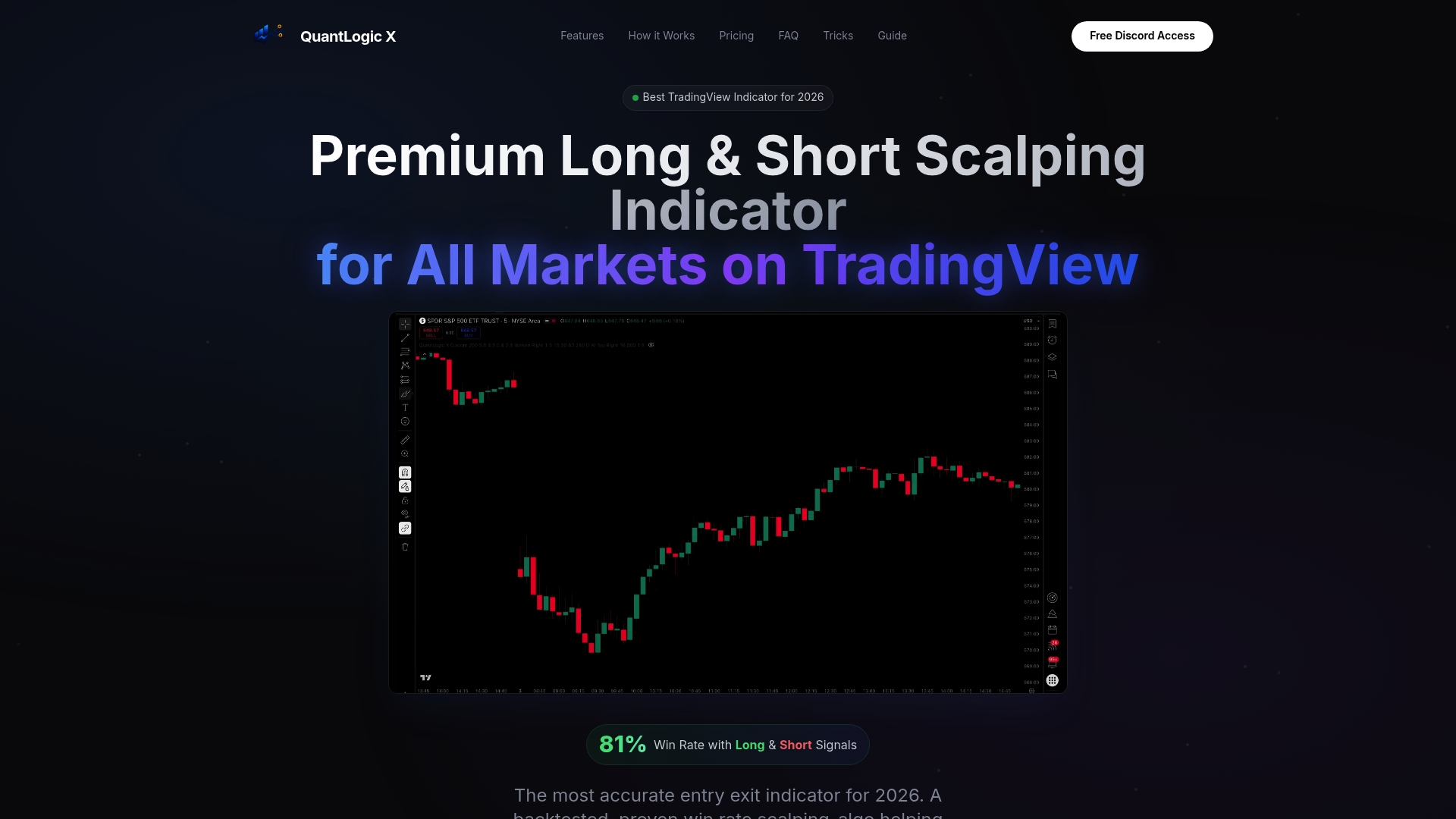
The Quantlogicx TradingView indicator delivers long and short signals with zero repaint technology, meaning every signal locks in at bar closure and never changes after the fact. Over 2,000 traders use it across stocks, forex, and cryptocurrency, with individual users recording gains of $8,200 in a single month. The algorithm carries an 81% win rate and integrates real-time alerts so you never miss an entry. Whether you are new to signals or refining an existing system, the Quantlogicx indicator gives you a rules-based foundation built for consistent execution.
FAQ
What is signal-based trading?
Signal-based trading is a method where traders act on predefined, rule-driven market alerts rather than subjective judgment. Signals fire when specific conditions, such as a moving average crossover or RSI threshold, are met.
How do trading signals reduce emotional bias?
Signals enforce a disciplined framework that counters fear and greed by requiring traders to act only when objective criteria are satisfied. This removes the in-the-moment emotional pressure that drives most retail trading losses.
Do trading signals guarantee profits?
No signal system guarantees profits. Signals improve consistency by providing a repeatable edge, but all trading carries risk. Pairing signals with strict risk management, including stop-losses and reward targets, is what produces long-term positive expectancy.
How do I know if a trading signal is reliable?
Backtest the signal against historical data to measure its win rate, average gain, and maximum drawdown. A reliable signal shows consistent performance across multiple market conditions, not just a single favorable period.
Can beginners use signal-based trading?
Beginners benefit most from starting with one simple, well-understood signal and paper trading it before going live. The day trading routine of reviewing trades weekly and following signals strictly builds the discipline that makes the system work over time.